
Individuals with intellectual disabilities face daily challenges that extend far beyond routines and logistics. Too often, they also encounter systemic barriers, misunderstanding, and prejudice. Advocacy is not simply helpful in these circumstances — it is essential. It is the pathway to dignity, opportunity, and belonging.
The Power and Purpose of Advocacy
Advocacy is more than speaking on someone’s behalf. At its best, advocacy creates space for people to speak for themselves. It ensures individuals are not just supported, but heard. Not just present, but valued.
When we advocate, we open doors for people to assert their rights, participate fully in their communities, and show up as their authentic selves. We move from protection to empowerment, and that shift changes everything.
Empowering Voices Through Experience and Choice
Every person has unique experiences, perspectives, and preferences. True empowerment begins with recognizing that choice is powerful, and that choice is only meaningful when it’s informed by experience.
When I meet new employees, I often ask a simple question:
“Do you prefer steak, pasta, or neither?”
After they answer, I follow up with, “How do you know?”
The answer is obvious: They know because they’ve had the opportunity to try. They’ve experienced. They’ve decided.
If we fail to ensure that individuals with intellectual disabilities have access to experiences like community outings, education, friendships, risks, celebrations, even failures, how can we truly honor their preferences? Without opportunity, there can be no authentic choice. And without choice, there is no self-determination.
Advocacy means insisting on inclusion in every space where life happens.
Advocacy in Action
Advocacy can begin in small, everyday ways, like listening with intention, reinforcing strengths, encouraging independence, and creating opportunities for decision-making.
But advocacy must also extend beyond the individual level. It includes educating others, challenging stereotypes, building partnerships, and influencing policy.
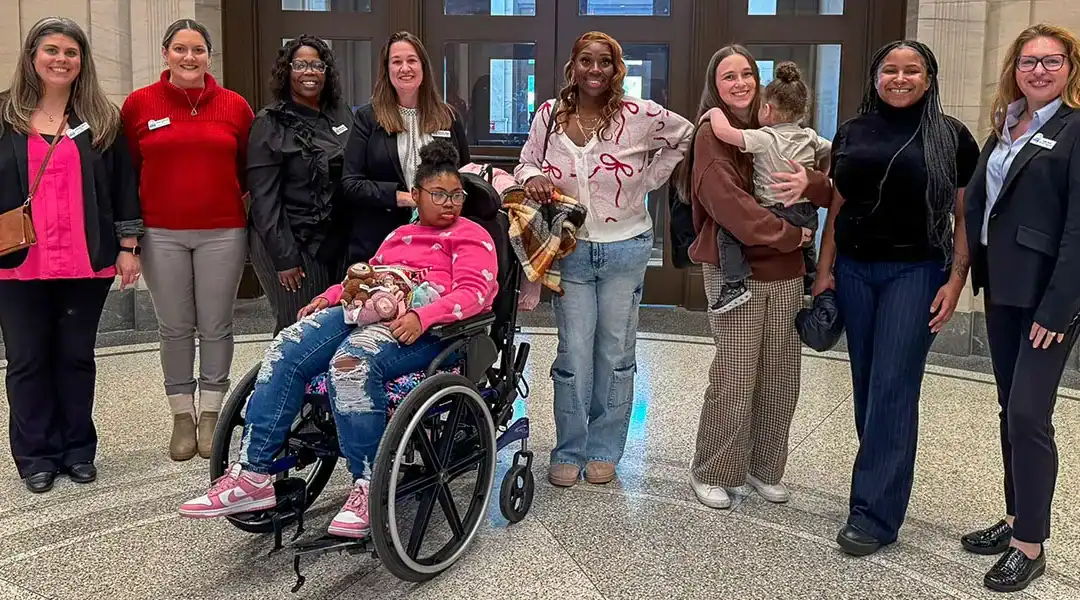
During our recent visit to the General Assembly, we met with legislators to share the mission of St. Mary’s Home and highlight how critical budget decisions directly impact the individuals who call St. Mary’s Home their home. We were met with kindness, openness, and engaged lawmakers willing to listen and learn.
Moments like these remind us that advocacy is both relational and systemic. It requires courage and persistence, but also optimism. Real change happens when stories are shared and hearts are open.
Most importantly, advocacy is not just an action. It is a mindset; one rooted in equality, respect, and the unwavering belief that every life holds value.
A Call to Action
Advocating for individuals with intellectual disabilities is not the responsibility of a select few. It belongs to all of us.
It asks for our empathy.
It demands our awareness.
It requires our action.
It is time to replace fear of the unfamiliar with intentional inclusion. To move from passive acceptance to active celebration of human diversity.
Together, we can build communities that open doors rather than close them. Communities where people are not defined by limitations, but recognized for their abilities, contributions, and dreams.
St. Mary’s Home remains steadfast in its commitment to championing individuals with diverse abilities, ensuring their voices are amplified, their rights protected, and their potential realized.
Empowering voices is not optional. It is a reflection of our collective humanity.
So don’t stare.
Don’t judge.
Instead, welcome.
Invite conversation.
Create space.
It can start with something as simple as a smile and a friendly “hello.”
Sometimes, real change begins that easily.
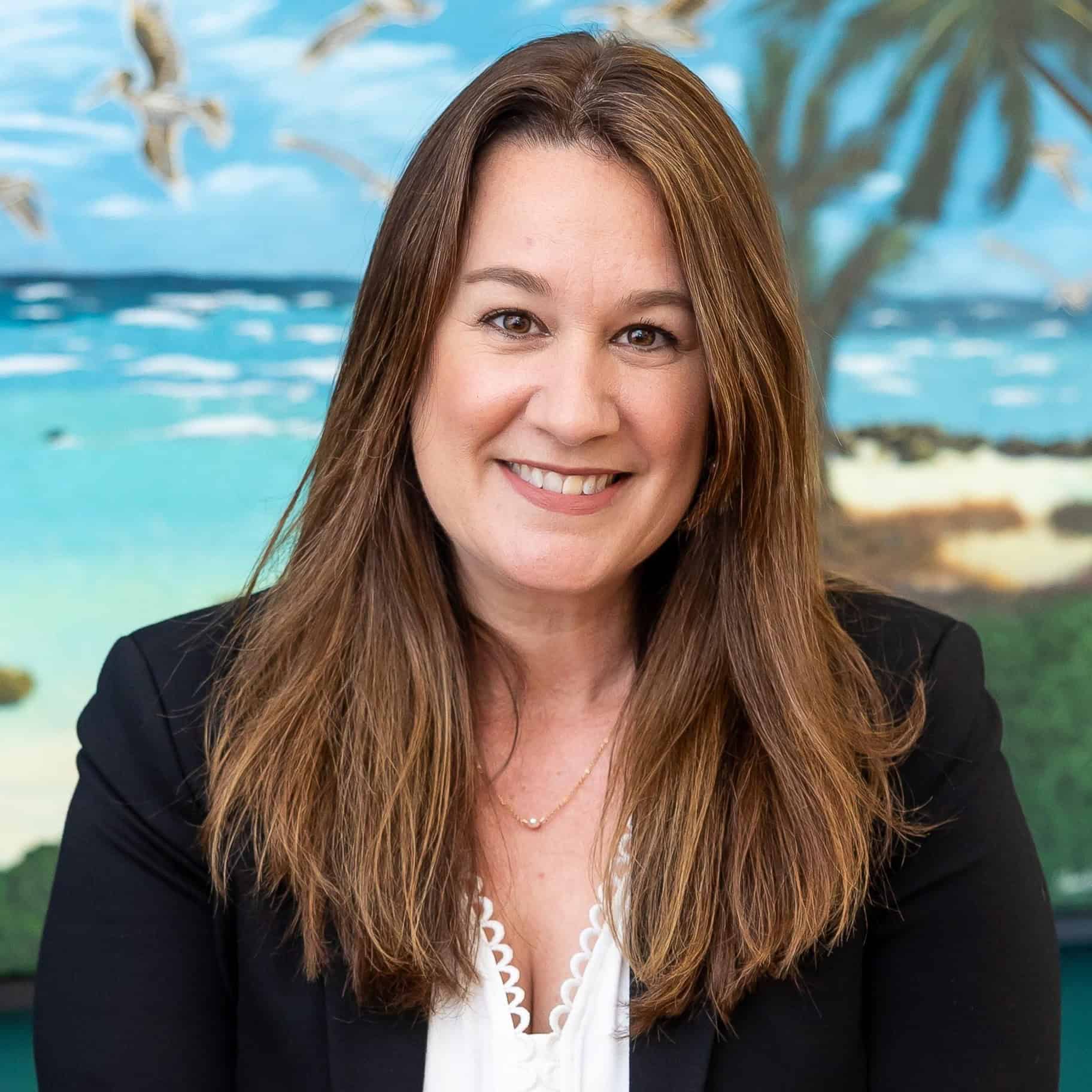
Shannon Edsall
Chief Executive Officer, St. Mary’s Home
Shannon holds a master’s degree in business administration and health care administration from the University of Phoenix as well as a bachelor’s degree in business administration with a minor in psychology from the University of Guam. Shannon began her career with St. Mary’s Home in 2011 and has over 12 years of experience working with individuals with disabilities.